Numo's World
Books about feelings, for children who don’t have the words yet. Numo’s antennae change colour with what he feels, and a three-year-old reads that before they can read anything else.
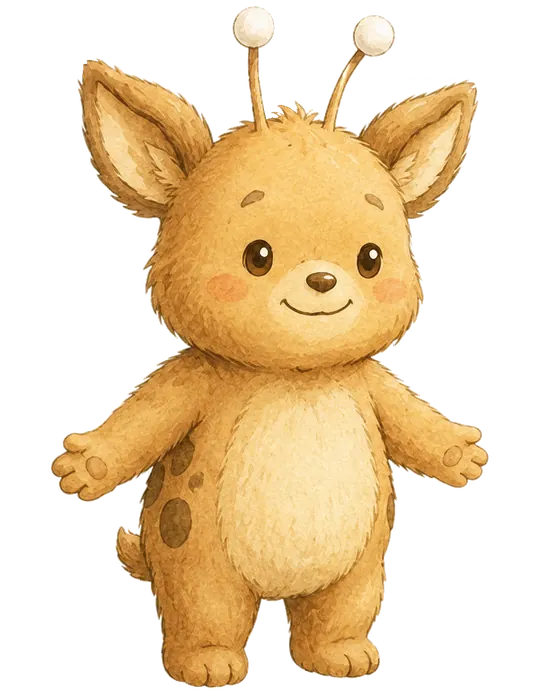
The antennae are white. Numo is fine.
This is one emotion — anger — from beginning to end. Every book follows one.
Meet Numo
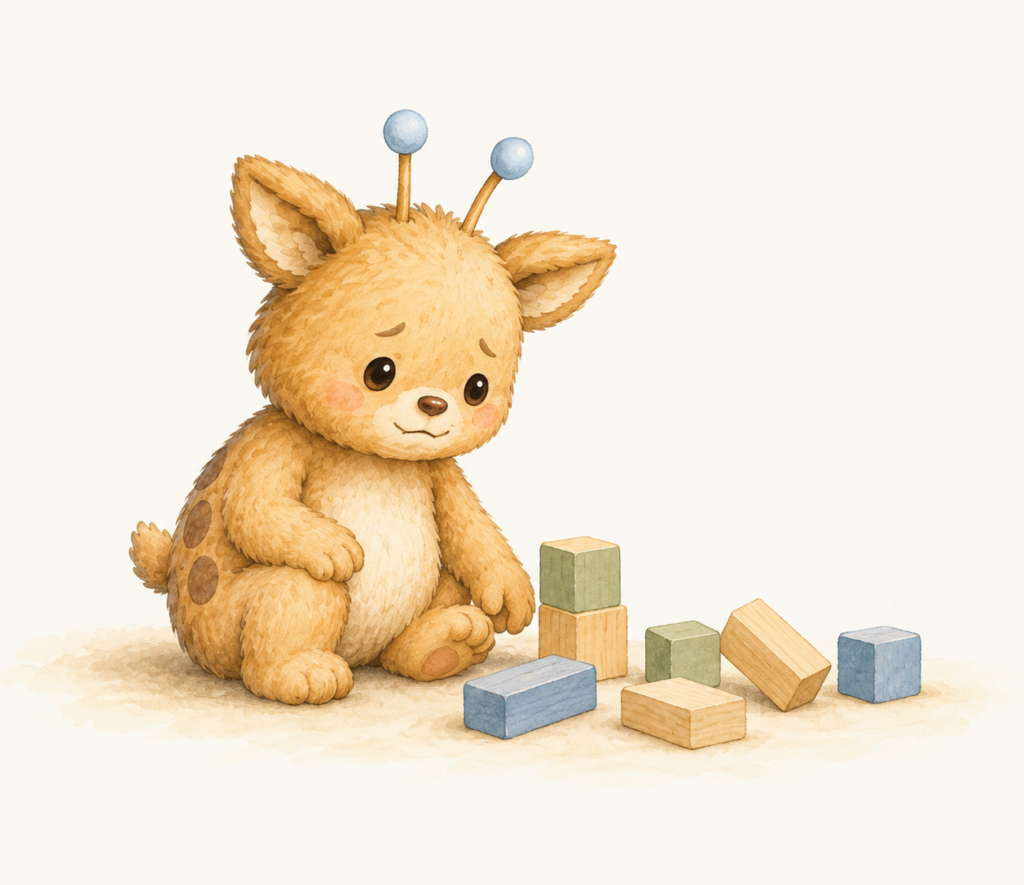
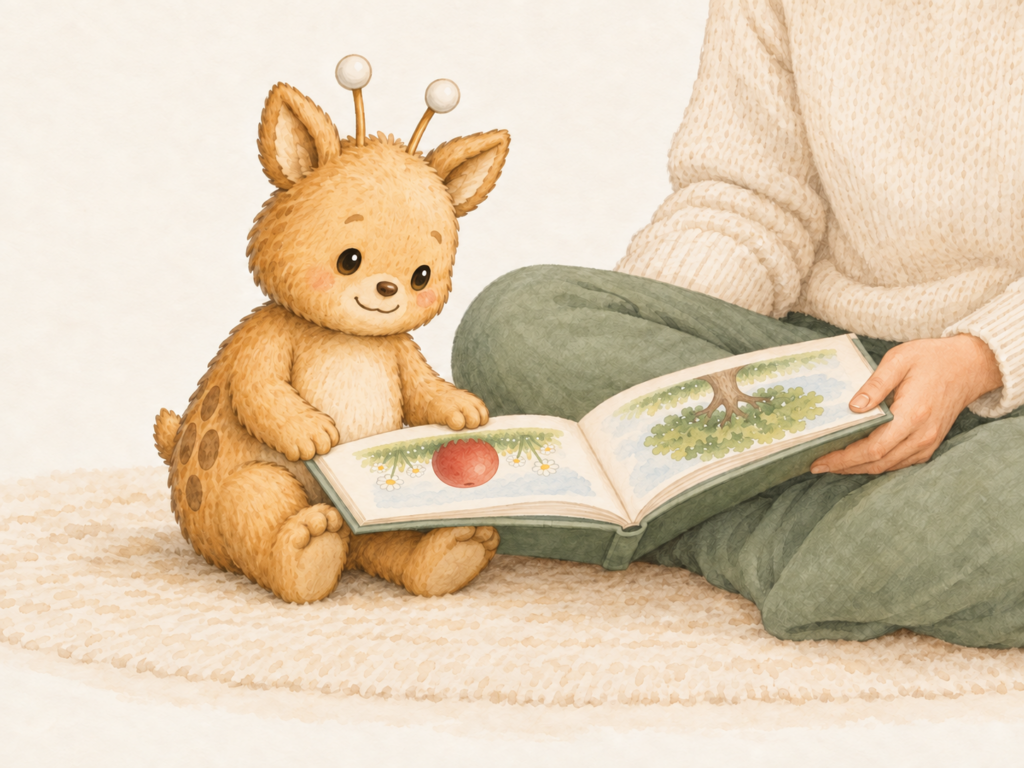
Numo is small, sand-coloured, and about as brave as any four-year-old.
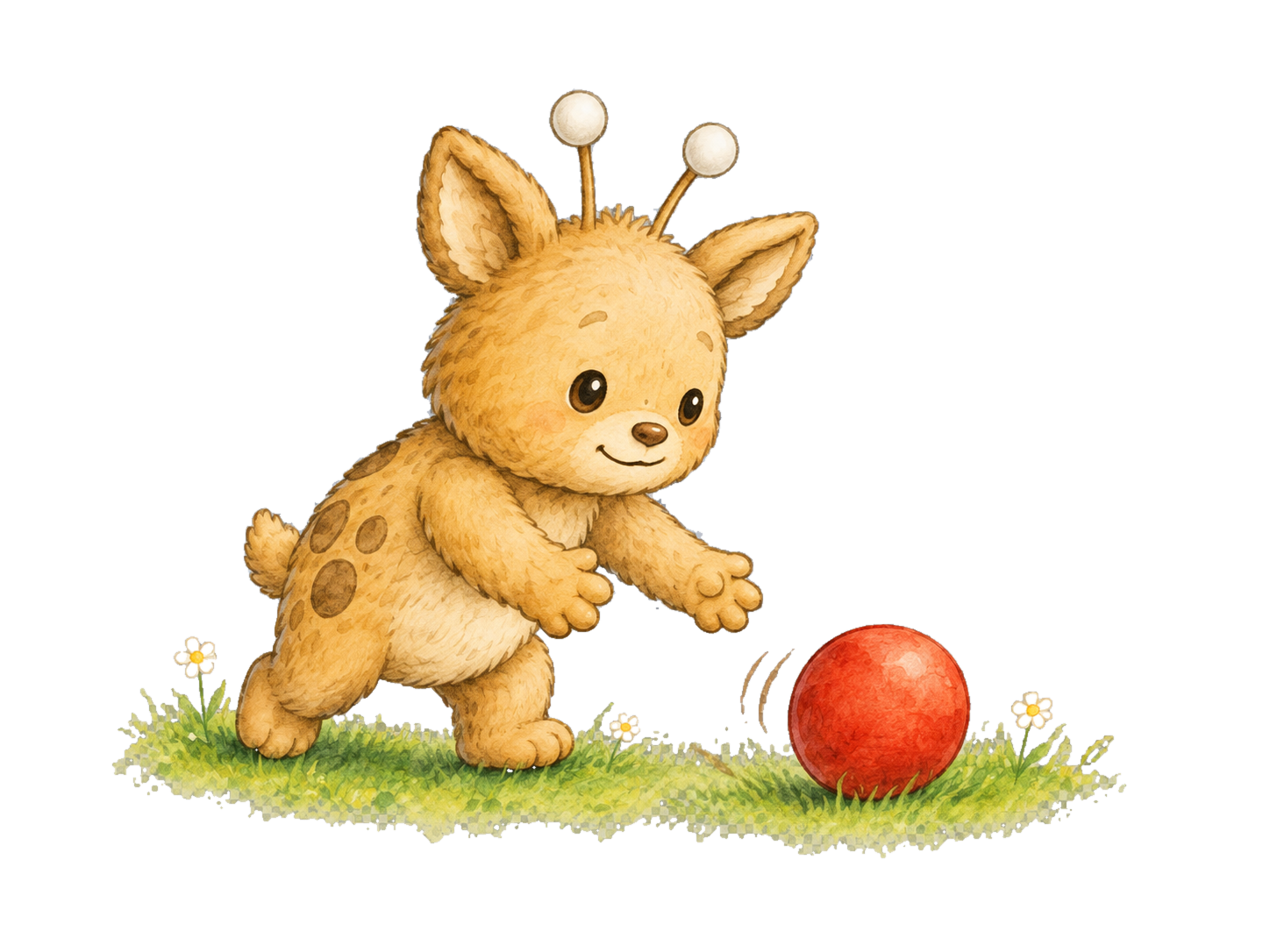
He goes where your child goes — the kitchen, the park, the queue at the supermarket — and things happen to him there. A ball rolls away. A shop is too loud. Someone else gets the swing first.
His antennae show what is going on inside him, before he has the words for it.
Why I made books about feelings
Numo is a creature, not a boy or a girl you could pick out in a playground. That was decided before anything was drawn.
A book about feelings has a problem the moment its character is recognizably human. Whatever that child does, a reader attaches it to that kind of child. He screamed over a cup — so that’s boys. She cried for twenty minutes — so girls overreact. That one went quiet instead of shouting — so children like that don’t feel much.
None of it is in the story. All of it gets read into the story anyway.
And it does the most damage in exactly the place these books are aimed at: the size of the reaction. A small child’s rage over a red cup looks enormous, and it looks ridiculous, and the point of the whole book is that it is neither. It is what happens when an unnamed energy arrives all at once in someone who has no name for it. Put a human face on that and it stops being a fact about children and turns into a fact about that kind of child — one who feels too much, or one who doesn’t feel enough.
So Numo is sand-coloured, has two antennae, and belongs to no country, no family and no playground. There is nothing in him to measure yourself against, and nothing to fail to match. Every child who opens the book can be Numo, and not one of them is being told anything about who they are, or whether what they feel is too much or too little.
The antennae carry the rest. What Numo feels is on the outside, in colour, where a child who cannot read a face yet — or cannot read at all — sees it straight away.
Why I made them
I went looking for books that would help my son understand what he was feeling. I found plenty. But most of them were harder to follow than the feeling itself: too many words, too much story, a lesson waiting at the end.
A child in the middle of it cannot follow a plot.
So I made books that move at the speed of the feeling. One thing happening. One page at a time. And a colour that says where we are.
Nothing dramatic ever happens
Nothing dramatic ever happens to Numo.
He is at home, at school, at the park, in a shop, at somebody’s birthday — the places your child is on an ordinary Tuesday. And the things that happen to him are the things that actually happen. A tower falls over. The red cup is in the dishwasher. Somebody is already on the swing. A game ends before it was finished. It’s time to leave and nobody is ready.
Written down like that, these are nothing at all.
That is the whole point.
Because inside a small child, none of them are nothing. An ordinary, unremarkable fact — a cup, a swing, a door closing — sets off an enormous amount of energy, and the child has no idea where it came from, what it is called, or what to do with it. It arrives faster than he can think about it. It is bigger than he is. And because nobody has ever named it, there is nothing to be done with it except let it come out however it comes out.
That is what these books are about. Not the swing. The thing the swing sets off.
So each story stays with the fact and tells it slowly, in detail, in order: what happened, then what happened next, and what was going on inside Numo the whole time. What his body did first. What he wanted to do. What actually came out. Nothing is summarized and nothing is skipped over, because the detail is how a child recognizes it — that happened to me, that exact thing.
And it stays a small story, never an explanation. No child will sit through an explanation of anger. Every child will sit through a story about a swing.
One feeling, from beginning to end
Every book follows a single emotion all the way through.
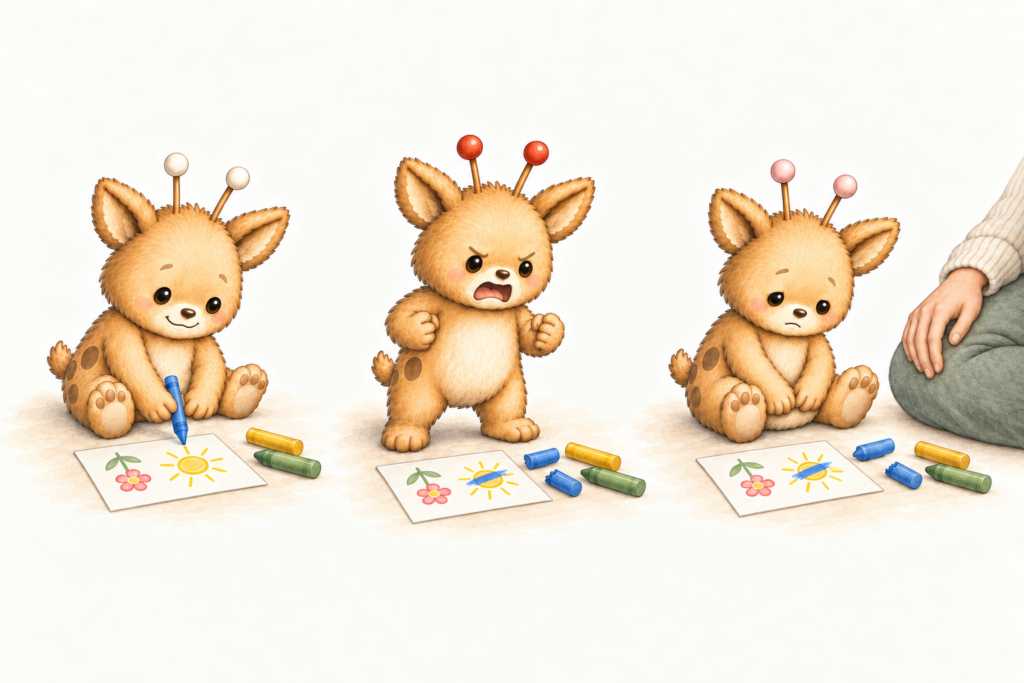
It opens in calm, and the antennae are white. Something happens. The colour warms, then burns.
And then — this is the part that took the longest to get right — it doesn’t get fixed. Nobody explains anything. Someone arrives and sits down, and the antennae turn pink.
Pink isn’t Numo’s colour. It’s the grown-up’s.
The page with no words
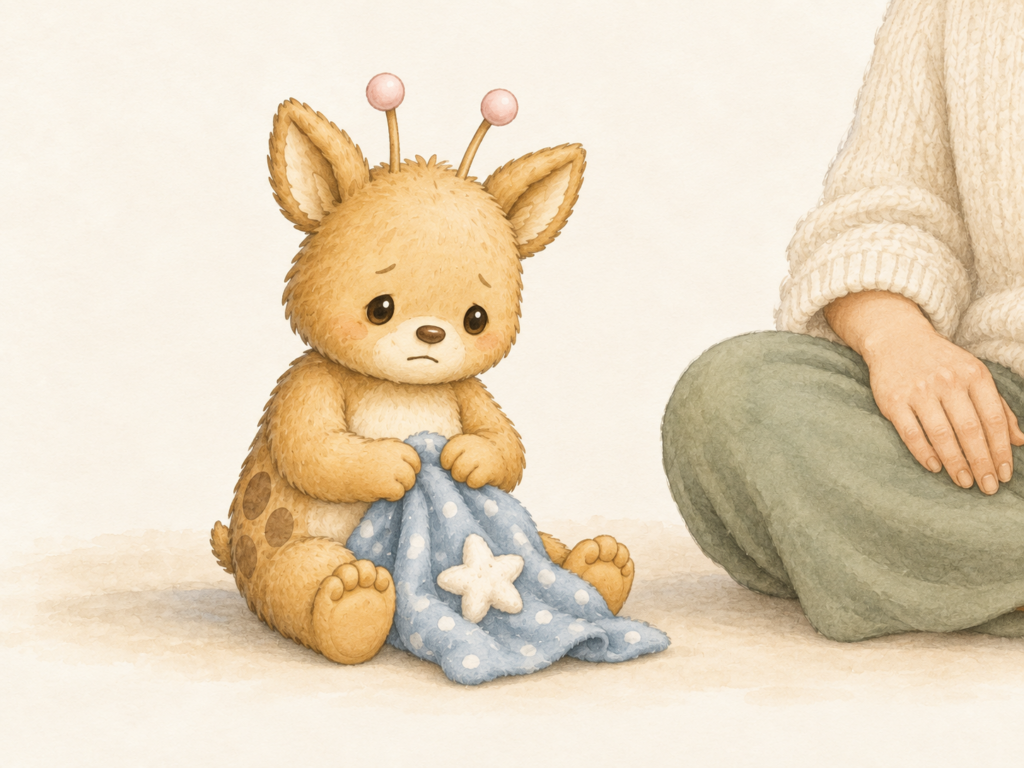
Near the end of every book there is a page with nothing written on it.
Just Numo, and someone staying with him.
It is there because that is what actually helps, and because a child who is still upset cannot take in a sentence. The silence on the page is permission to keep quiet.
They don’t say well done for calming down.
They don’t end with a lesson.
They don’t make the feeling disappear by the last page.
A child who hears that being angry was a mistake learns to hide it next time. I would rather he learned that it passes, and that someone stays.
What they don’t do
Eight books, one feeling each
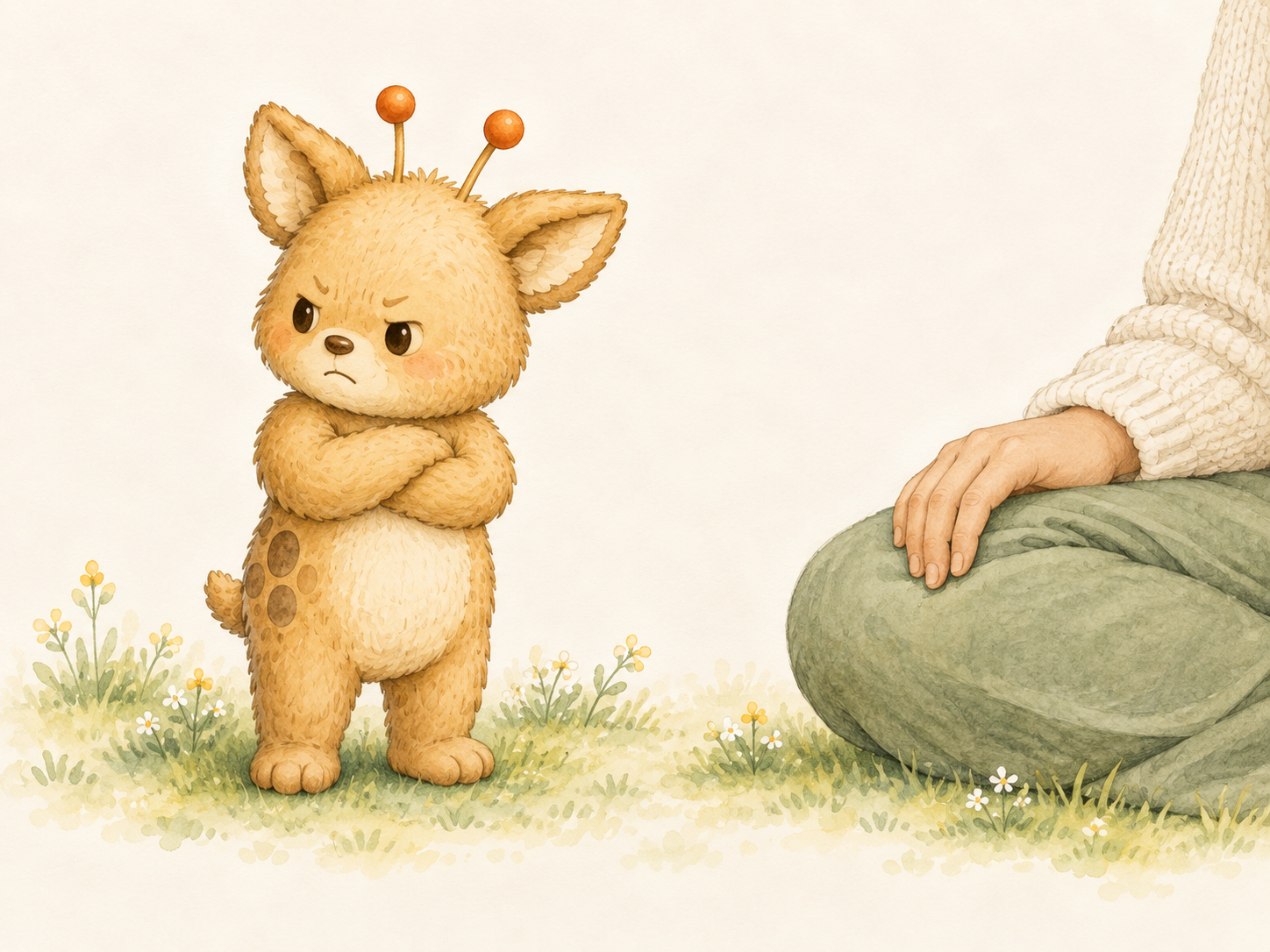
Anger is written. The others are being drawn.
Every book runs the same way — calm, then the feeling, then someone arriving. Only the colour at the top of the scale changes.
For the grown-up
These books work best read when nothing is happening — on an ordinary afternoon, not in the middle of a storm. A child who already knows how the story goes can borrow it later, when they need it.
And when the storm does come, the book has already said the only thing that matters: you don’t have to fix it. You can sit down.
Numo’s stories are coming
The first book is written and being drawn. If you’d like to know when it’s out, leave your email — that’s the only thing I’ll use it for.